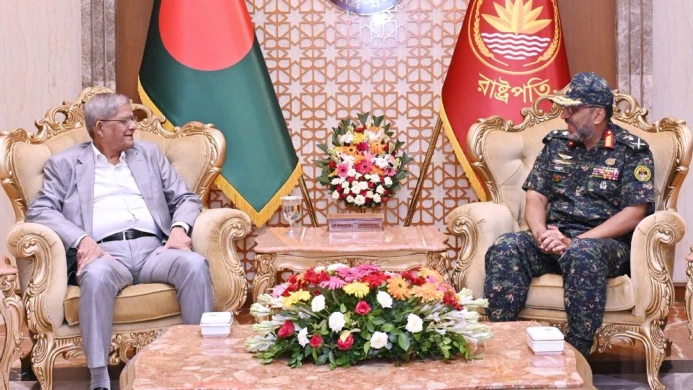
He made the remarks at his first durbar with officials and employees of Bangabhaban, held at 11:30am on Thursday (August 27) at the Durbar Hall of Bangabhaban.
The president said he would have neither anger nor favour toward anyone in carrying out his responsibilities. He said his sole objective would be to serve the interests of the country, the state and its people. He also stressed the importance of working with honesty, dedication, sincerity and responsibility while earning and maintaining public trust under all circumstances.
Urging Bangabhaban officials and employees to maintain their love, respect and loyalty toward the country, the president said Bangabhaban is a symbol of the dignity and sovereignty of the state. Everyone must play a responsible role in preserving its dignity, he added.
He instructed officials and employees to strictly maintain confidentiality regarding Bangabhaban’s daily operations and important state decisions so that national security is not compromised in any way.
The president also called for frugality and responsibility in government spending and urged officials to prevent waste. He said government assets and facilities are operated with public money, and therefore their proper, transparent and accountable use must be ensured.
He also stressed the importance of discipline, morality and good character in the personal lives of officials and employees.
Paying deep respect to those who sacrificed their lives in the Liberation War, the president recalled the contributions of Shaheed President Ziaur Rahman, the proclaimer of independence, and Prime Minister Begum Khaleda Zia to nation and state building. He also respectfully remembered all previous presidents.
Addressing Bangabhaban officials and employees, the president said they are all members of one family. He expressed hope that problems would be resolved through mutual discussion and that everyone would work together in the future.