Related News
The United Nations Independent International Fact-Finding Mission on Iran has said that US military strikes on a primary school and a sports facility in Iran could potentially constitute war crimes. The same report also accused Iranian authorities of committing crimes against humanity while suppressing anti-government protests.
The findings were published on Thursday (September 17). The report is scheduled to be presented to the UN Human Rights Council in Geneva.
According to reports by Reuters and Al Jazeera, the investigation examined US military operations during the war in Iran that began in February, as well as the actions taken by Iranian authorities to suppress anti-government protests that spread across the country during the same period.
According to the fact-finding mission, a US strike on a primary school in Minab, Iran, killed more than 150 people, including around 120 children. A separate strike on a sports facility in Lamerd left 22 civilians dead or injured. The mission examined whether the attacks on civilian facilities complied with international law.
The investigation also found evidence of serious human rights violations by Iranian authorities during the suppression of anti-government protests that began in late December. The report cited unlawful killings, torture, arbitrary detention, enforced disappearances and internet shutdowns. The mission said such acts could amount to crimes against humanity.
Neither the US nor Iranian permanent missions in Geneva immediately commented on the report. US officials have previously maintained that their military operations were conducted in accordance with the laws governing international armed conflict. Iran, meanwhile, has repeatedly rejected allegations of systematic human rights violations in the country.
Related News
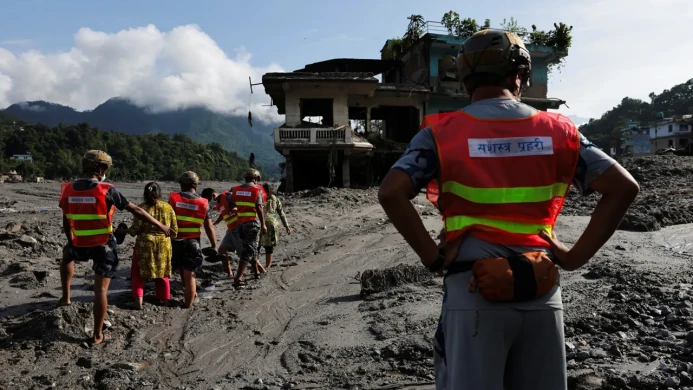
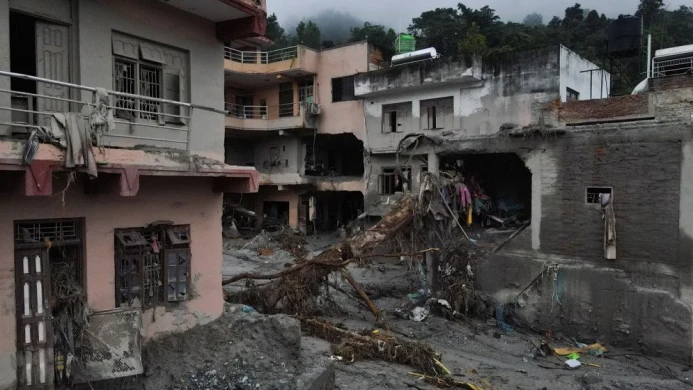
The death toll from flash floods and mountain torrents along the Nepal-Tibet border has surpassed 1,400. According to the latest official figures from Nepal, the bodies of 1,377 people have been recovered on the Nepalese side, while at least 43 people have died in Tibet.
More than 5,500 people remain missing on both sides of the border. Authorities said the chances of finding survivors have declined as considerable time has passed and the disaster has caused widespread devastation.
Nepal’s financial losses from the disaster have exceeded 400 billion Nepalese rupees. The government is preparing to seek emergency loans and international assistance to rebuild damaged areas and infrastructure.
Local authorities are also struggling to provide medical care as hospitals and health centres in the affected areas have been damaged. Concerns over waterborne diseases are also increasing.
Of the 15 water sources in Bidur Municipality, harmful E. coli bacteria have been detected in five. This has raised fears of serious health risks and the spread of waterborne diseases in the disaster-hit areas.
Related News
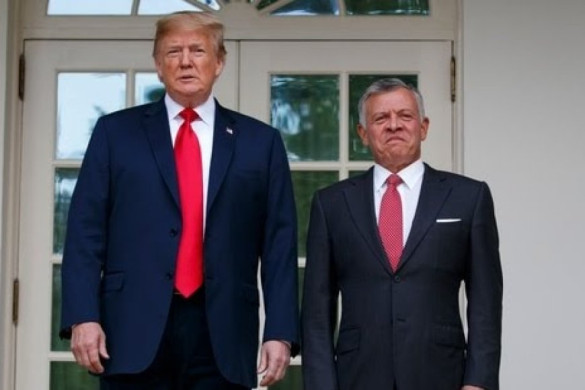
Saudi Arabia has strongly condemned Iran’s ongoing attacks on Jordan. The Saudi Foreign Ministry expressed its position in a statement issued on Wednesday, September 9.
The statement said Iran’s bombing attacks constitute a direct violation of international law and the principles of good-neighborly relations. Saudi Arabia called for an immediate end to such attacks against Jordan and other countries in the Middle East.
It also urged effective and serious measures to restore security and stability across the region.
Earlier, Iran’s Islamic Revolutionary Guard Corps (IRGC) said it had launched a ballistic missile attack targeting a US military base in Jordan. The United States, however, said there were no casualties in the attack.
The IRGC said its retaliatory attacks would continue until US aggression comes to an end.
Related News
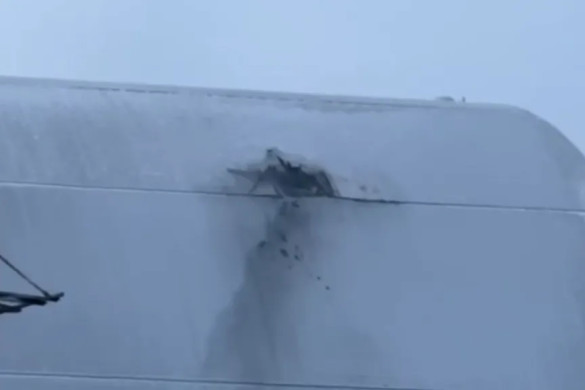
Iran’s Islamic Revolutionary Guard Corps (IRGC) has claimed that it seized a US unmanned underwater drone near the entrance to the Strait of Hormuz. The United States, however, said one of its older-model drones had malfunctioned in the area due to a mechanical failure.
According to a report broadcast by Iran’s state television citing the IRGC, Iranian naval forces seized what was described as an advanced and sophisticated unmanned underwater vehicle near the entrance to the Strait of Hormuz early Tuesday following an intelligence operation.
The IRGC said the underwater vehicle was equipped with advanced technology and had been added to the US Navy’s fleet in 2025. It also said images of the seized vehicle would be released soon.
Iranian media reported that unmanned underwater vehicles of this type are used for underwater exploration and surveillance, seabed mapping, mine detection, and inspection of submarine cables and pipelines.
Following Iran’s announcement, a US official told Al Jazeera that an underwater drone operated by US forces in the Middle East had suffered a mechanical failure more than a day earlier.
The official said the drone had been used to conduct surveys in regional waters in support of ongoing operations. He described it as an older model that did not have the capability to collect sensitive information or carry radar equipment.
Related News
At least seven people, including children, were reportedly killed and another seven injured in an alleged Saudi airstrike on a correctional facility in northern Yemen, according to Houthi rebels.
Houthi-controlled Al-Masirah television reported that the attack took place on Monday, September 7, at a correctional facility in Yemen’s Al-Jawf province, near the Saudi border. The channel also released footage of the aftermath.
According to the Houthis, the main building of the correctional facility collapsed after being hit by bombs. Rescue operations are currently underway to determine whether anyone remains trapped beneath the rubble.
The Houthis also accused Saudi Arabia of carrying out killings in the Al-Jawf region, flying surveillance drones and supplying weapons to armed groups. They further claimed responsibility for attacking a Saudi truck carrying military equipment at a checkpoint near the border of Hadramout province.
Saudi Arabia has not yet commented on the allegations made by the Houthis.
Related News
The United States has imposed fresh sanctions on 36 Iranian entities, accusing them of supporting Iran’s aviation sector. The sanctions include 27 Iranian aviation companies.
The US Treasury Department announced the measures in a statement on Tuesday, September 8.
According to the Treasury Department, the Iranian government has been using its aviation sector to transport weapons, personnel and illicit goods.
Washington said the latest sanctions are part of its commitment to take strong action against entities that provide financial support to the Iranian government or help sustain the country’s economy.
US Treasury Secretary Scott Bessent said the sanctions serve as a warning to individuals and businesses maintaining commercial ties with the targeted Iranian aviation companies.
He added that those who continue doing business with the sanctioned entities could face the risk of being cut off from the global financial system.
Related News
At least seven Palestinians, including two children, were injured in Israeli attacks across different areas of the Gaza Strip, according to medical sources cited by Anadolu Agency.
The report said two people were injured after Israeli naval forces opened fire on tents sheltering displaced Palestinians in the Al-Khalidi area of northwestern Gaza City.
In a separate attack, a child was injured at another camp for displaced people in the Al-Sudaniya area of northwestern Gaza.
The Palestinian Red Crescent Society also reported that three people were injured in an Israeli airstrike in the Tuffah neighbourhood of northeastern Gaza City. A child suffering from shrapnel wounds in the same incident was also taken to hospital for treatment.
Meanwhile, the Palestinian news agency WAFA reported that four people were injured in attacks in the Tuffah and Al-Sudaniya areas.
According to various sources, since the ceasefire came into effect on October 11, at least 1,344 Palestinians have been killed and another 4,464 injured in Israeli military operations.
Related News
Military tensions between the United States and Iran have escalated once again in the Strait of Hormuz, with both sides reporting fresh attacks on Saturday, September 5.
Iran’s Islamic Revolutionary Guard Corps (IRGC) claimed that it fired ballistic missiles targeting a US aircraft carrier and a destroyer in the strategic waterway.
According to Iranian authorities, the two American warships were obstructing the movement of Iranian vessels and were involved in maritime blockade operations. However, the US Central Command (CENTCOM) said the Iranian missiles failed to hit any American vessels. It also stated that no US personnel were injured in the incident.
In response, the United States reportedly launched attacks on three Iranian oil tankers. CENTCOM said two tankers near the coastal area of Kharg Island and another near Jask were disabled. A third empty tanker positioned in the Gulf of Oman was reportedly destroyed.
Meanwhile, Iranian state media claimed that four US missiles struck a tanker anchored near Kharg Island. Iranian sources said there were no reports of casualties from the attack.
The continuing exchange of attacks around the Strait of Hormuz has raised fresh concerns about further instability in the Middle East. Commercial shipping through the strategically important waterway, one of the world’s key maritime trade routes, has already declined significantly amid the escalating tensions.
Related News
Iran has become fully self-sufficient in producing military weapons, equipment and defense systems, according to Brigadier General Alireza Elhami, commander of the country's Air Defense Force.
Speaking in Tehran on Friday (September 4), Elhami said Iran's air defense forces are producing and modernizing the weapons and equipment they need by relying on domestic knowledge, technology and expertise. He claimed that the country no longer depends on foreign sources in this sector.
Elhami said Iran used lessons learned from recent conflicts to develop and improve new air defense systems, even during wartime. Some of these newly developed systems were later deployed in operational areas, he added.
He said Iran remains prepared to confront any potential conflict, now or in the future, as threats against the country have not completely disappeared. According to him, recent wartime experiences have also highlighted the need to further strengthen Iran's integrated air defense network.
The air defense commander said the country is utilizing the capabilities of young defense scientists, universities and various knowledge-based institutions to develop military technologies and equipment based on national requirements.
Elhami further claimed that the recent conflict demonstrated a new level of Iran's national strength and defense capabilities. He also praised members of the air defense units of the Islamic Revolutionary Guard Corps (IRGC).
According to Brigadier General Elhami, their courage and resistance played an important role in confronting what he described as enemy aggression.
Related News
More News
- 1
- ...
- 97
Leave a Reply
Your email address will not be published. Required fields are marked *